Carnatic Music with Sreekumar Ramakrishnan
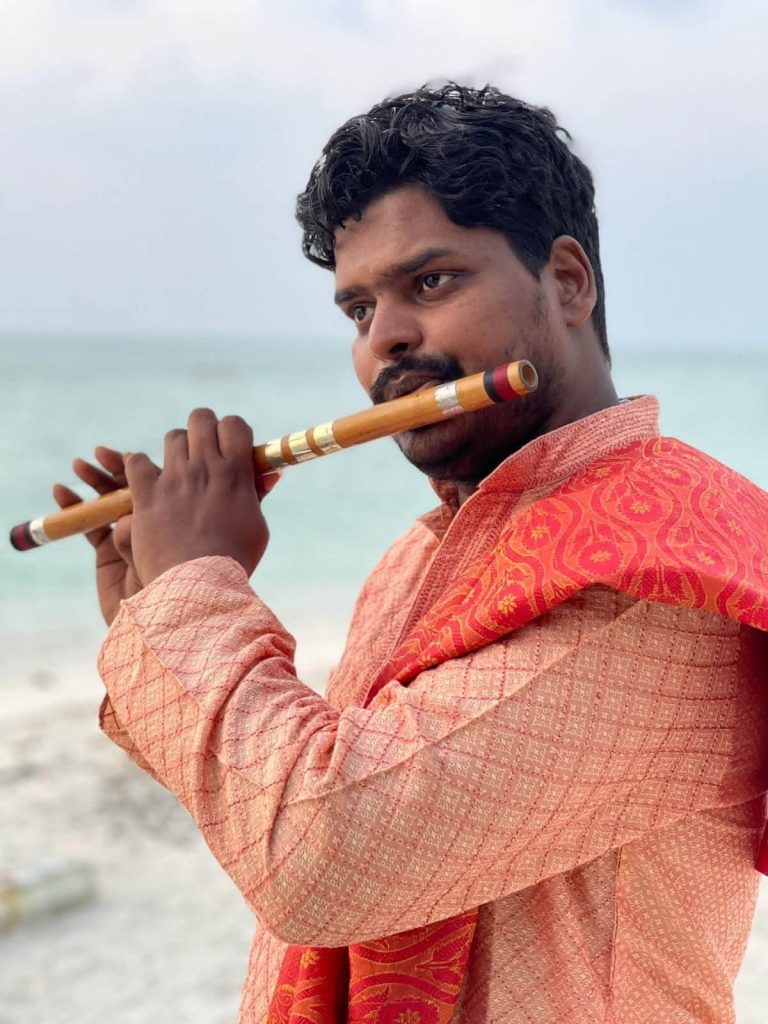
Sreekumar Ramakrishnan is a highly accomplished Carnatic musician, recognized for the expressive depth of his playing.
Excellence in training:
He studied with legendary masters such as Sangeetakalaanidhi N. Ramani, and holds a Master’s degree in Music from the University of Madras (with honors).
National recognition:
A three‑time winner of the Indian National Cultural Competition, he is a recognized artist with All India Radio and is accredited by the ICCR.
Expertise: With more than 20 years of career, he has taught at Shankaracharya University and served as a cultural ambassador at NSCBICC in Kuala Lumpur.
Instruments and Practices
– The Venu flute: A traditional bamboo flute with deep, meditative tones, known for its subtle ornaments (gamakas).
– Carnatic singing: At the heart of this tradition, based on Raga (melody), Tala (rhythm), Sahitya (poetic text), and Gamaka.
– The Mridangam: A double‑headed drum and central rhythmic instrument, it is the true keeper of the time cycle.
Course Structure and Benefits
Classes are taught in English to encourage immersion and are open to all ages.
– Benefits: Mental calm, improved concentration, deep relaxation, and the joy of expression.
– Approach: Work on breath, listening, and rhythm in a caring environment.
Artistic Journey
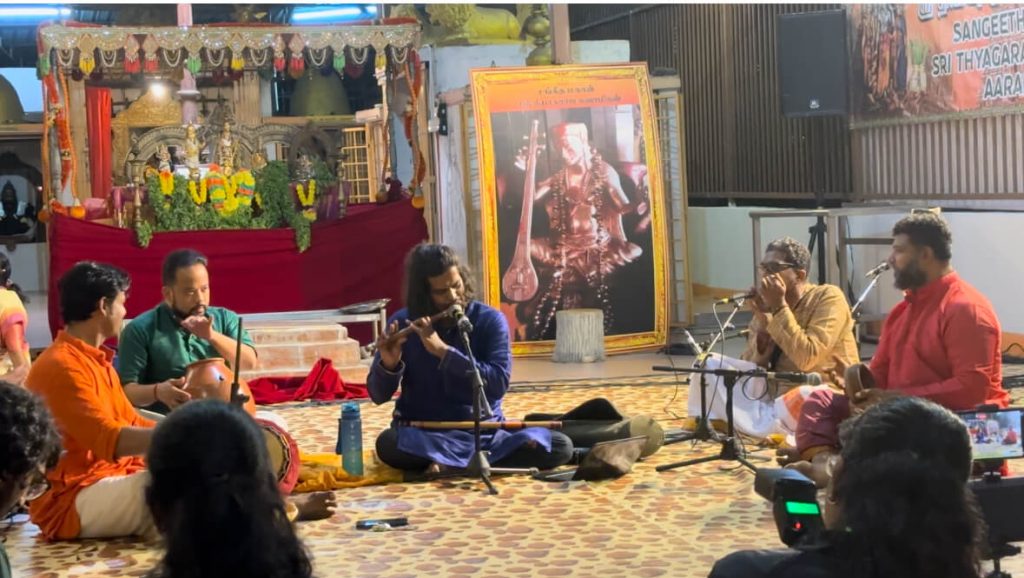
Sreekumar has more than 20 years of musical career and has performed solo concerts in many prestigious venues in India, especially in Kerala, Chennai, and major temples and festivals. Key performances include:
– Lakshadeepam concert at Sreepadmanabha Temple (Chembai)
– Main Sangeetotsavam concert in Guruvayoor
– Main Devasthanam concert at Tirupati Tirumala Temple
He has led his own musical ensembles, organized group rehearsals, and taken part in thousands of performances, building a strong artistic presence. Thanks to the teaching of his gurus and his talent, he has accompanied leading dance and music artists from South India, such as:
Padmabhushan C. V. Chandrasekhar
Padmasri Vilasini Teacher
Manjubhargavi
Shobana
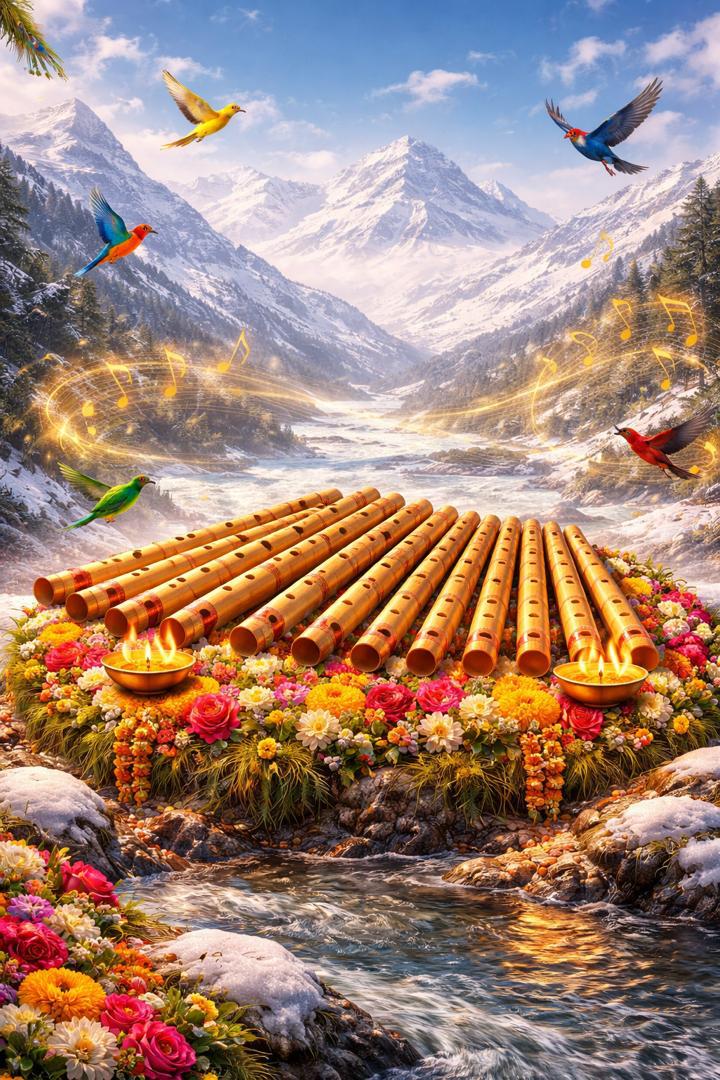
The Carnatic flute, known as the venu, is one of the most expressive instruments in South Indian classical music. Made of bamboo, it is appreciated for its warm tone, subtle ornamentations (gamakas), and remarkable improvisational possibilities within the ragas.
Mentioned in ancient Indian traditions and represented in sacred art, the venu has been elevated by renowned masters such as Palladam Sanjeeva Rao, T. R. Mahalingam, and N. Ramani. Learning the Carnatic flute develops breath control, concentration, musical sensitivity, and a deeper understanding of melodic expression.
Extrait
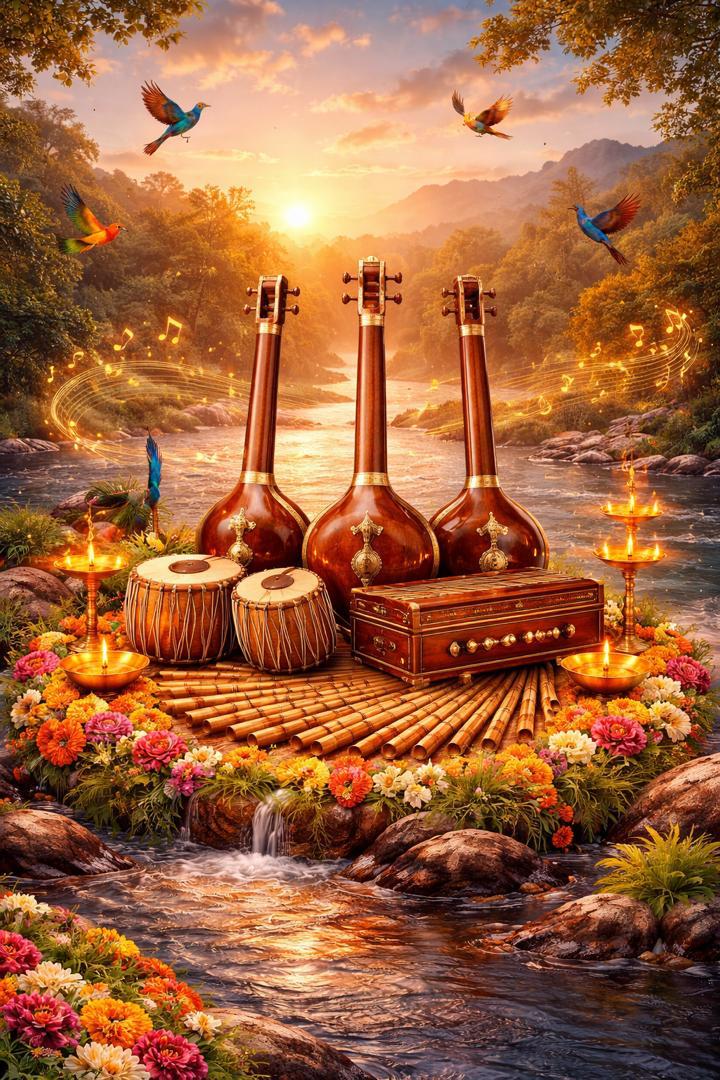
Vocal music forms the foundation of the Carnatic tradition and remains at the heart of South Indian classical music.
It is based on four essential elements: raga (melody), tala (rhythm), sahitya (lyrics), and gamaka (ornamentation). Students learn compositions from great composers such as Tyagaraja, Muthuswami Dikshitar, Shyama Shastri, Purandara Dasa, and Annamacharya.
Vocal training strengthens listening skills, breathing, memory, and emotional expression while providing a solid foundation for the study of Indian classical music.
Extrait
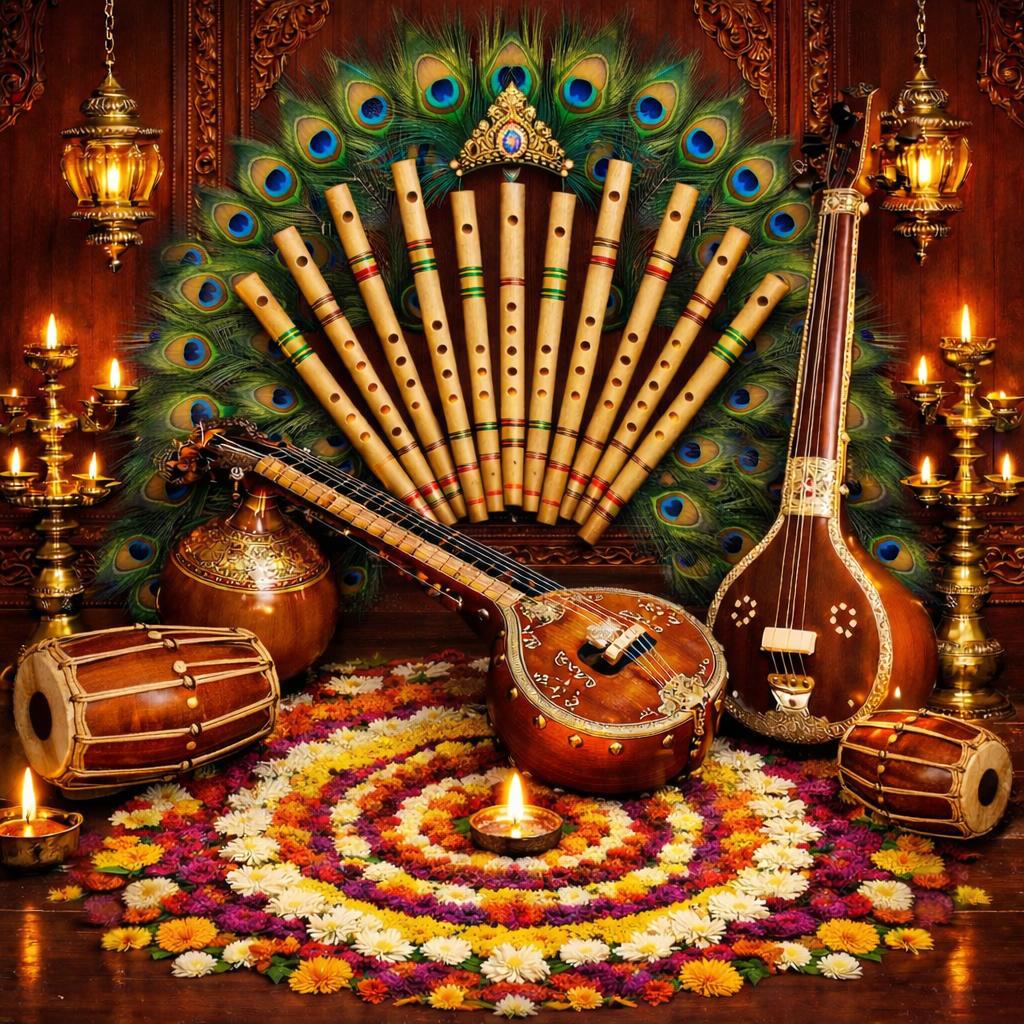
The mridangam is the principal percussion instrument of Carnatic music and serves as the foundation of the rhythmic structure.
This double-headed drum is played with the hands and fingers, producing a rich variety of sounds and rhythmic patterns.
Celebrated masters such as Palghat Mani Iyer, Palani Subramania Pillai, and Umayalpuram K. Sivaraman have shaped its modern tradition.
Learning the mridangam develops rhythmic precision, concentration, coordination, and a deeper understanding of tala, the rhythmic cycle of Indian classical music.
Extrait
Raga therapy explores the relationship between music, emotions, and well-being through the use of Indian classical ragas.
In this tradition, a raga is more than a scale; it combines specific notes, characteristic melodic movements, and emotional qualities. Certain ragas are traditionally associated with relaxation, concentration, balance, or meditation.
While not a medical treatment, raga therapy is widely appreciated as a complementary practice that encourages emotional awareness, inner calm, and a deeper connection with music.
Extrait
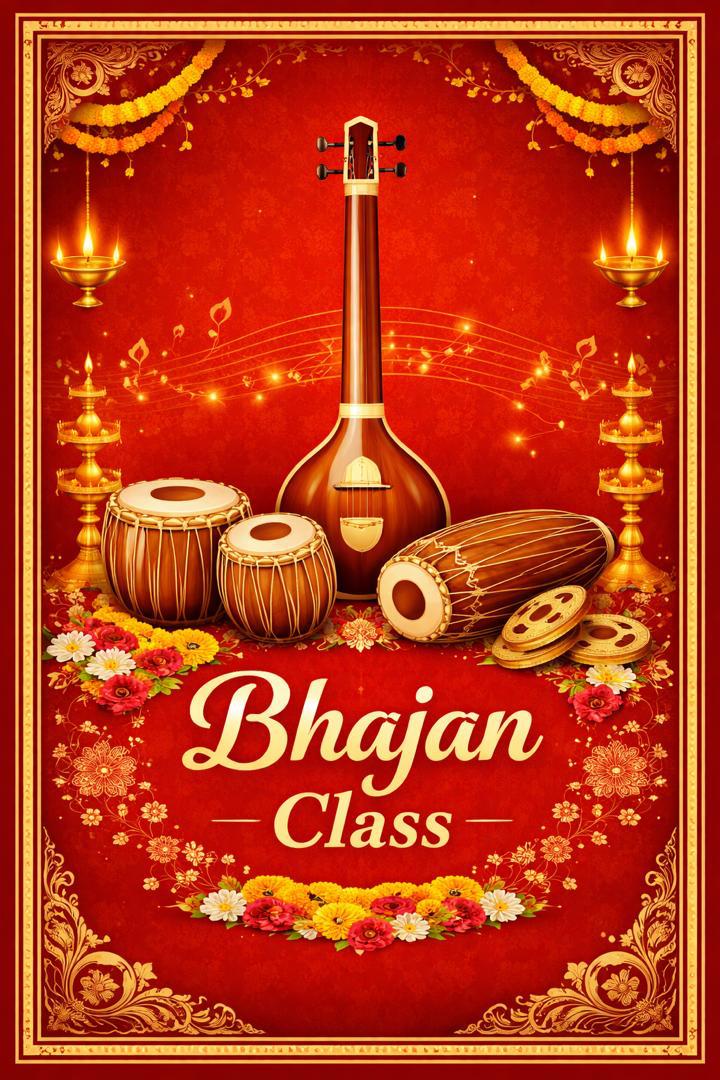
Bhajans are devotional songs that express love, gratitude, praise, and remembrance of the Divine.
Rooted in the Bhakti tradition, they have been sung for centuries in homes, temples, festivals, and spiritual gatherings throughout India.
Great poet-saints such as Mirabai, Kabir, Tulsidas, Tukaram, Purandara Dasa, and Tyagaraja contributed to this rich repertoire.
Simple, accessible, and deeply expressive, bhajans encourage participation, concentration, and meditation while creating a sense of community and spiritual connection.
Extrait
– Progressive learning adapted to each level
– Work on breath, rhythm, and listening skills
– Vocal and instrumental practice
– A traditional and caring approach
– Deep relaxation in everyday life
– Mental and emotional calming
– Improved concentration
– Better mood
– The joy of playing and singing
– Reduced stress
– Improved sleep
– Better emotional regulation
– Increased calmness
– Enhanced meditation experience
– Greater sense of well-being
Online Classes : individual and groups
Contact : Sreekumar Ramakrishnan
Whatsapp number : +91 87 14 28 50 43
The Ecosystem of Serenity
contact@calmandfocusworld.com
08h – 18h From Monday to Friday
WhatsApp us